How Much Down Payment Do You Need for a Hard Money Loan in Los Angeles?
Key Takeaways and Insights
Understanding down payment requirements for hard money loans in Los Angeles is vital for real estate investors aiming to scale their portfolios quickly. The amount of cash you need depends on your experience, the property's Loan-to-Value ratio, and the specific type of investment strategy you choose. Securing a reliable local lender ensures accurate property appraisals and faster closing timelines.
* Fix and flip projects typically require a 10 to 20 percent down payment based on the purchase price.
* Ground-up construction loans demand a larger equity cushion, usually around 25 to 30 percent down.
* Investors can minimize cash requirements by cross collateralizing existing properties or finding deeply discounted deals.
Real estate investing in Los Angeles requires significant capital and rapid execution. Traditional banks often move too slowly for competitive property deals. This reality pushes many local investors toward private capital.
When you seek fast financing, the most common question arises quickly. You need to know exactly how much cash to bring to the closing table.
Down payments for private financing are not one size fits all. The required amount depends on your experience, the property type, and your exit strategy. Private lenders evaluate risk differently than conventional mortgage lenders. They focus on the asset rather than just your personal credit history.
This guide explains exactly what to expect when funding your next Los Angeles property deal.
Understanding Private Capital and Down Payments
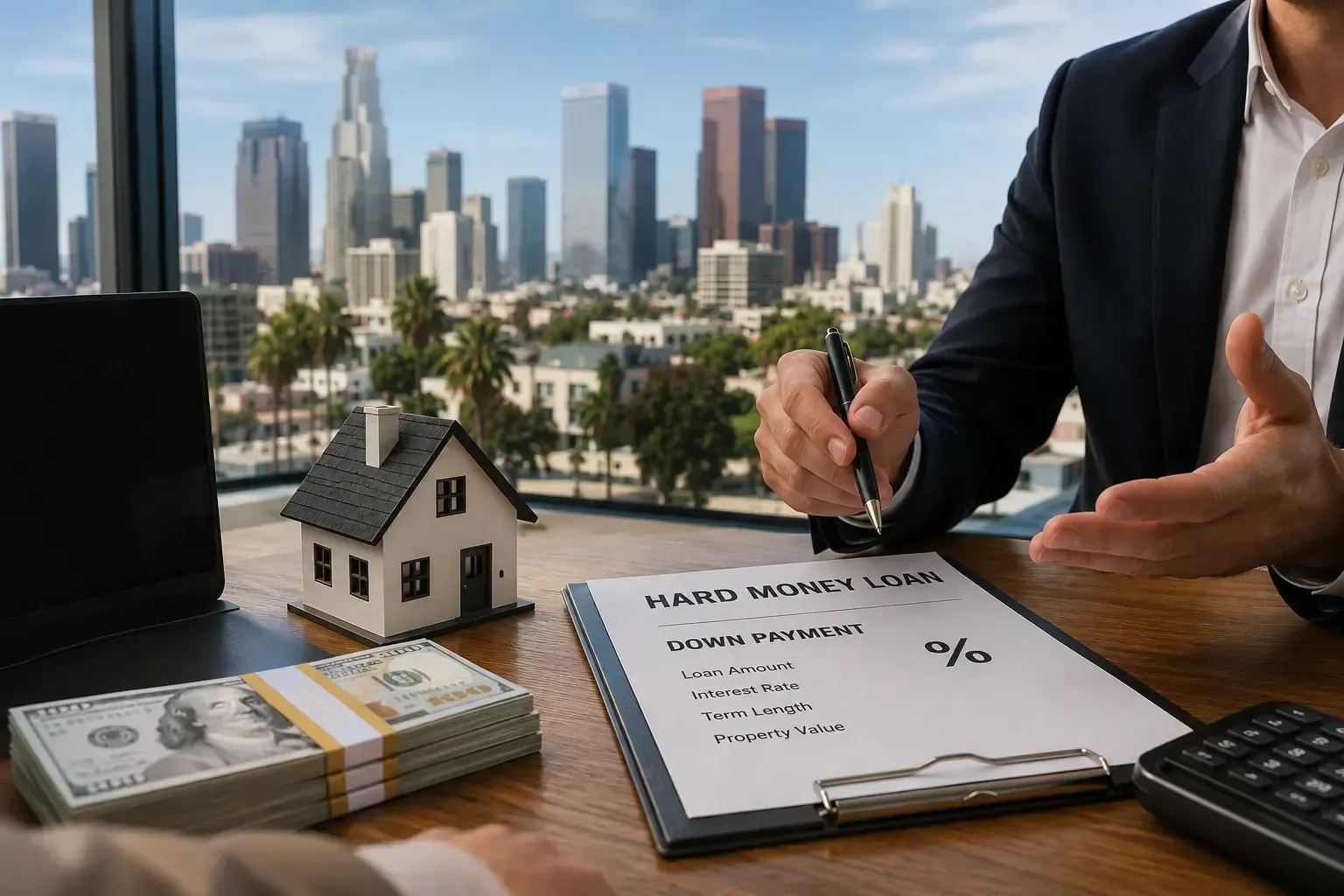
Conventional lenders usually ask for a flat 20 percent down payment. Private loans operate on a different scale. The primary metric used by private lenders is the Loan-to-Value ratio. This is commonly known as LTV.
LTV represents the loan amount divided by the current value of the property. For example, a property valued at $1,000,000 with a $700,000 loan has a 70 percent LTV. The remaining 30 percent is your required down payment.
Another vital metric is the After Repair Value. This is known as ARV. Hard money lenders look at what the property will be worth after you finish renovations. Your down payment is directly influenced by both the current value and the future potential value of the asset.
Partnering with a Hard Money Lending Service
Working with a local team provides distinct advantages in Southern California. The Los Angeles market has unique zoning laws, varied neighborhood valuations, and rapid market fluctuations.
A nationwide lender might not understand the distinct value of a property in East Los Angeles CA 90022 compared to a property in another state. A local Hard Money Lending Service understands these granular market differences. They can accurately appraise your project. Accurate appraisals lead to better loan terms and lower down payments for the borrower.
When you work with a regional expert like Gro Hard Money Los Angeles, you get a partner who knows the local terrain. This localized knowledge speeds up the underwriting process. It also ensures your LTV and ARV calculations match reality.
Down Payments by Investment Type
The amount of cash you need depends heavily on your specific investment strategy. Lenders categorize risk based on what you plan to do with the real estate. Here is a breakdown of typical down payment expectations by project type.
Fix and Flip Projects
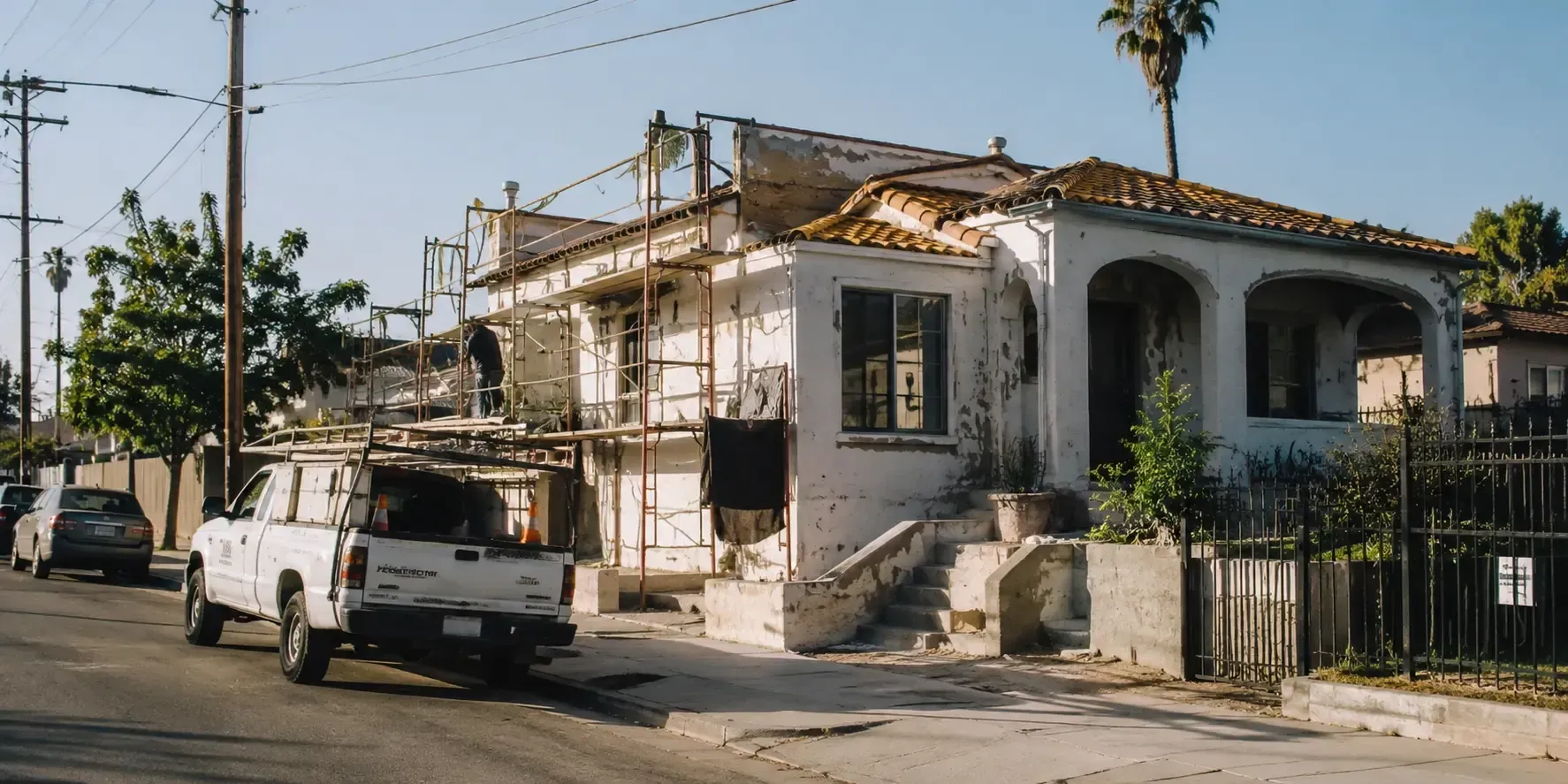
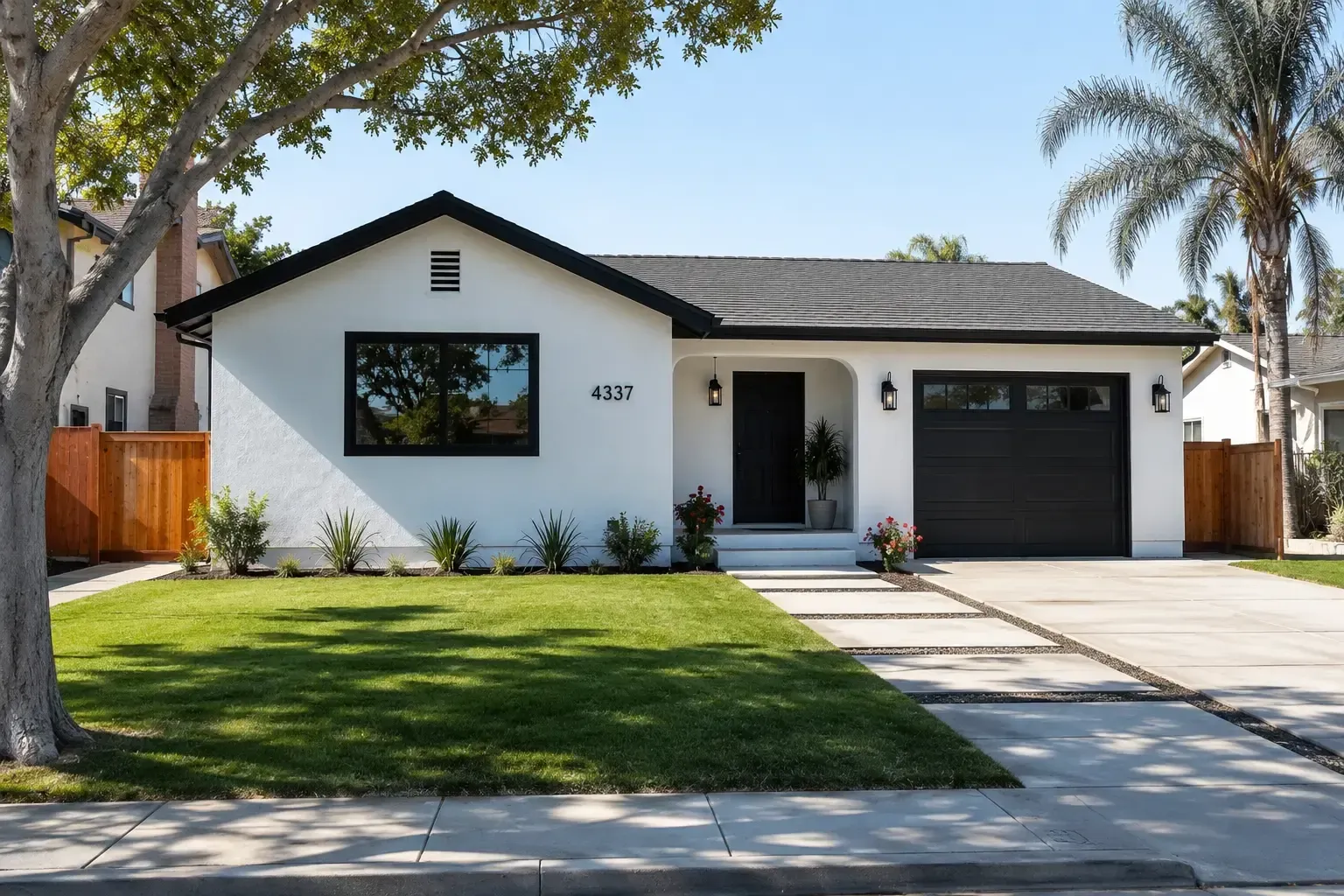
House flipping is highly popular in Los Angeles. These projects involve buying distressed real estate, renovating it, and selling it for a profit.
For these deals, lenders usually cover up to 90 percent of the purchase price. They also frequently cover 100 percent of the renovation costs. This means your down payment is typically 10 to 15 percent of the initial purchase price.
Your experience level plays a huge role here. A seasoned investor with a track record of successful flips will secure the lowest down payment. A brand new investor might need to bring 20 percent to the table. Securing dedicated fix and flip loans keeps your out of pocket costs manageable while you improve the property.
Ground-Up Construction Deals
Building a brand new property carries more risk than renovating an existing one. Construction takes time, permits are complex, and delays happen frequently.
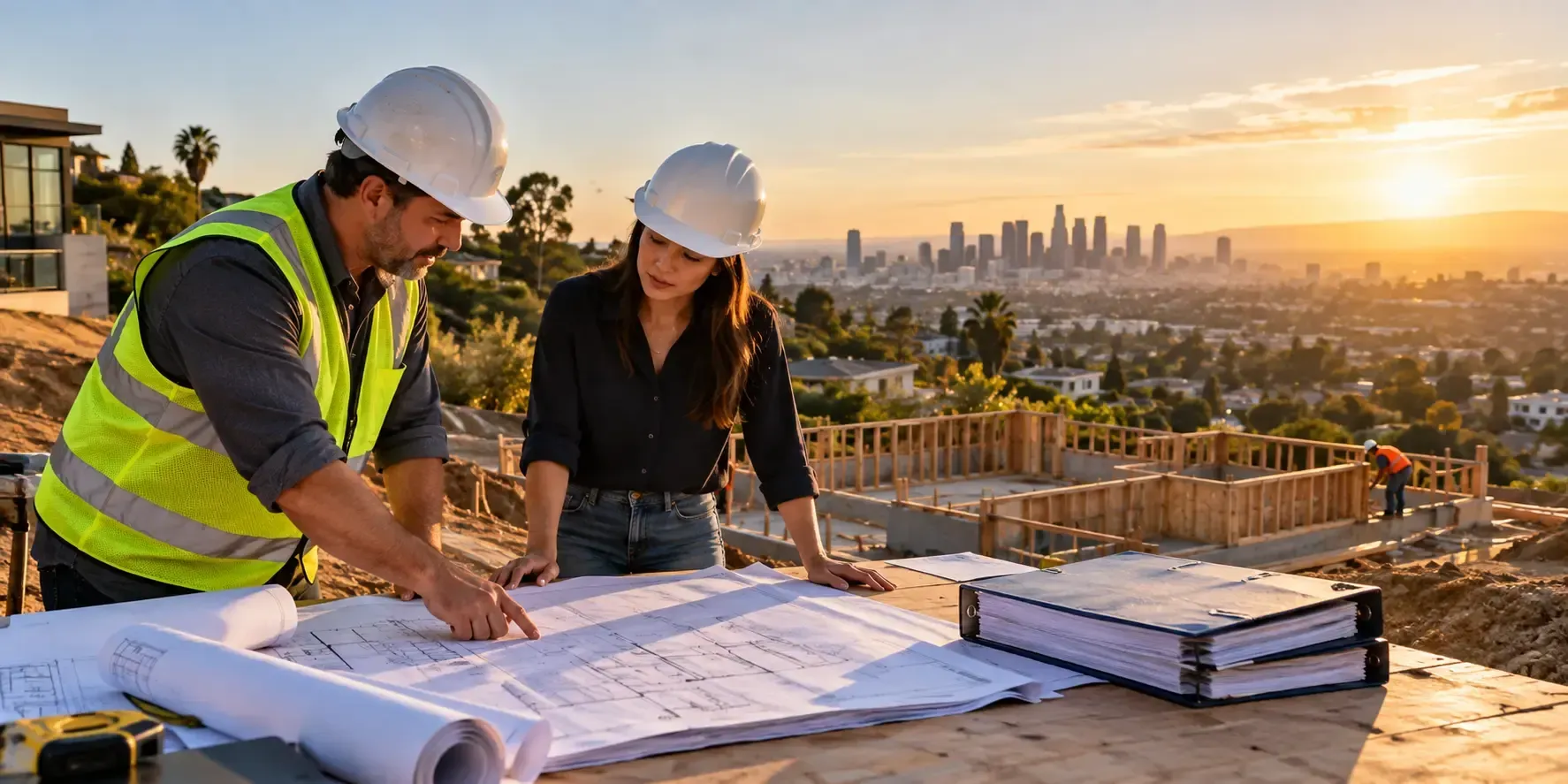
Because of this increased risk, lenders require a larger equity cushion. You can generally expect to put down between 20 and 30 percent of the land purchase price. The lender will then disburse funds for the actual construction in a series of draws.
Specialized construction loans are structured to protect both the borrower and the lender. By bringing 25 percent down, you show the lender that you have serious skin in the game.
Fast Bridge Financing
Sometimes you just need temporary capital. You might need to close on a new property before selling an old one. You might also want to stabilize a commercial rental before securing long term bank financing.
Bridge financing is the solution. These loans rely on the current as-is value of the property. Lenders typically offer up to 75 percent LTV on bridge deals. This means you need a 25 percent down payment.
Using strategic bridge loans allows you to act quickly when an opportunity appears. You secure the property now and figure out the permanent financing later.
Hard Money Loan Comparison Table
Reviewing the data side by side helps clarify your capital requirements. Below is a detailed breakdown of standard private financing structures in the Los Angeles market.
| Loan Type | Typical LTV | Down Payment Range | Best Used For |
|---|---|---|---|
| Fix and Flip | 80% - 90% | 10% - 20% | Distressed property renovations |
| Ground-Up Construction | 70% - 75% | 25% - 30% | Building new residential structures |
| Bridge Financing | 70% - 75% | 25% - 30% | Fast acquisitions and transitions |
| Rental Portfolio | 75% - 80% | 20% - 25% | Purchasing tenant-ready properties |
alculating Your After Repair Value
Understanding your ARV is critical for minimizing your down payment on renovation projects. The ARV dictates your maximum loan amount.
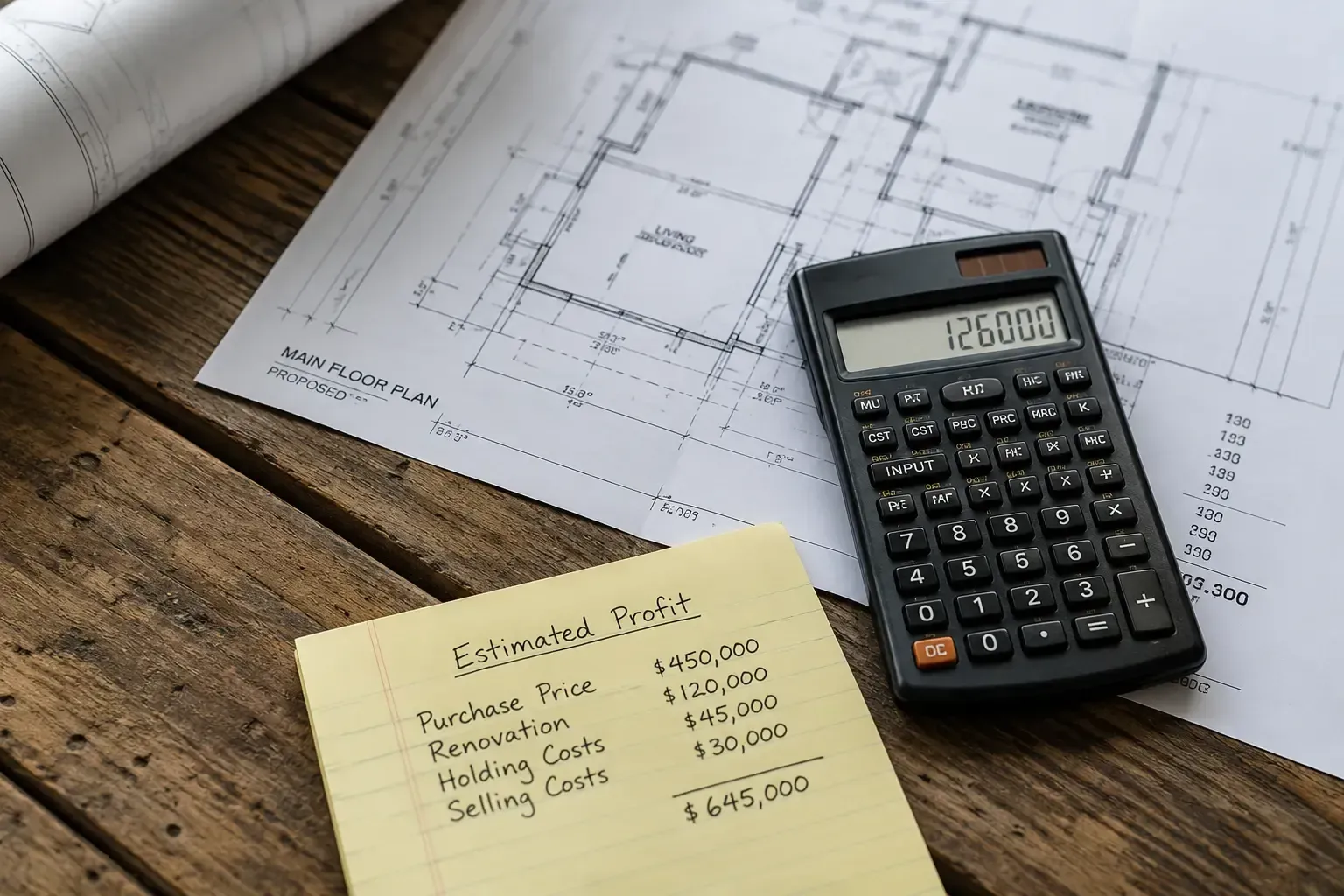
Lenders typically cap their total loan amount at 70 to 75 percent of the ARV. Let us look at a simple math example to illustrate this concept clearly.
- You find a distressed property for $500,000.
- It needs $100,000 in repairs.
- Your local appraiser determines the finished home will sell for $900,000.
- Your ARV is $900,000.
If the lender caps the loan at 70 percent of ARV, your maximum loan amount is $630,000. Your total project cost is $600,000. In this specific scenario, the loan covers the entire purchase and renovation. You only need to pay closing costs and loan fees.
Strong deals with massive profit margins require much less cash out of pocket.
Strategies to Minimize Your Down Payment
Every real estate investor wants to maintain high liquidity. Keeping cash in your bank account allows you to fund future deals or cover unexpected project delays. There are several ways to lower your required down payment.
Build a Strong Track Record
Experience is the ultimate currency in private lending. Lenders look closely at your past projects. If you have successfully completed five flips in Los Angeles over the last two years, you present a very low risk.
Low risk translates directly to lower down payments. Lenders will happily stretch their LTV limits for proven operators.
Offer Additional Collateral
If you lack cash for a down payment, you can leverage other assets. This is known as cross collateralization.
If you own another investment property with significant equity, you can pledge that property as additional security. The lender places a lien on both properties. This strategy can effectively reduce your cash down payment to zero.
Find Deeply Discounted Properties
As shown in the ARV calculation, buying real estate under market value solves many problems. When you buy a house for significantly less than it is worth, you create instant equity.
Lenders love instant equity. If you buy a property at a massive discount, the lender feels secure. They will often fund a higher percentage of the purchase price.
The Application and Approval Timeline
Traditional bank mortgages take 30 to 45 days to close. They require endless tax returns, income verifications, and personal financial audits. This slow pace is toxic for real estate investors.
Private lenders operate differently. They focus on the real estate asset. They evaluate the location, the purchase price, and the repair budget. Because the asset secures the loan, the underwriting process is incredibly fast.
Most private loans in Los Angeles can close within 7 to 10 days. If the title is clean and the appraisal is completed quickly, some deals close in as little as 5 days.
This speed gives you a massive competitive advantage. When you submit an offer on a property, you can promise a fast closing. Sellers love fast, reliable closings. Your offers become much stronger when backed by private capital.
Getting Started with Your Next Deal
Preparing your documentation early ensures a smooth process. You should have your purchase contract ready. You need a detailed scope of work for your renovations. You should also prepare a short summary of your past real estate experience.
The Los Angeles real estate market is highly competitive. Having reliable capital is non-negotiable. Knowing exactly how much down payment you need allows you to plan effectively. It helps you manage your budget. It ensures you never miss out on a profitable property.
If you are ready to secure funding for your next project, you need a responsive partner. The team in Los Angeles, California is ready to review your deal. Call +1 323-310-0936 today to discuss your exact financing requirements and get your project moving forward.
Frequently Asked Questions
Can I get a hard money loan with zero down payment?
Yes, it is possible but highly rare for beginners. Zero down payment loans typically require cross collateralization. You must pledge another property you already own as additional security to cover the equity requirement.
Do private lenders check my credit score during the application?
Private lenders primarily focus on the value of the property. They do run soft credit checks to look for recent bankruptcies or foreclosures. However, a low credit score will not automatically disqualify you if the real estate deal is highly profitable.
How fast can a hard money loan close in Los Angeles?
A standard private loan takes roughly 7 to 10 days to close. The timeline depends heavily on how quickly the local appraisal is completed and how fast the title company can clear the property for transfer.