Maximize Your Property Value: Using Construction Loans in East LA Real Estate

John Constantine • March 24, 2026

East Los Angeles is sitting on a goldmine of underdeveloped dirt. Period. Look past the iconic arches of El Mercadito or the bustling stretch of Whittier Boulevard. What do you see? Pure opportunity. The real estate market here is shifting. Older properties with massive lots are begging for modernization. But cash is tight. Traditional banks move at a glacial pace. You need capital. Fast. That is exactly where specialized construction loans step in.
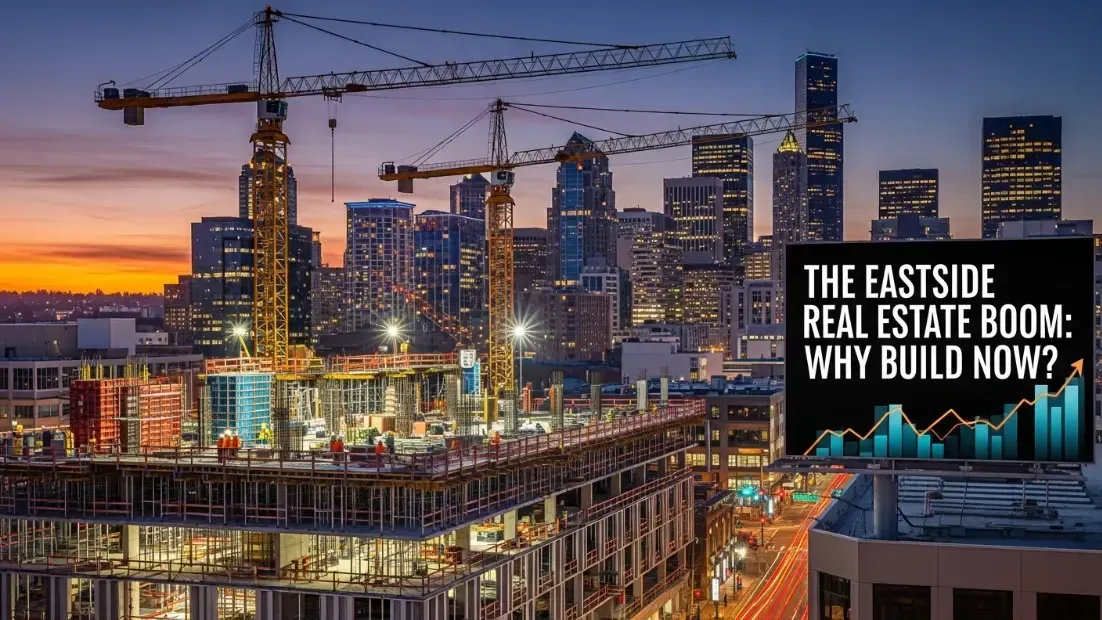
The Eastside Real Estate Boom: Why Build Now?

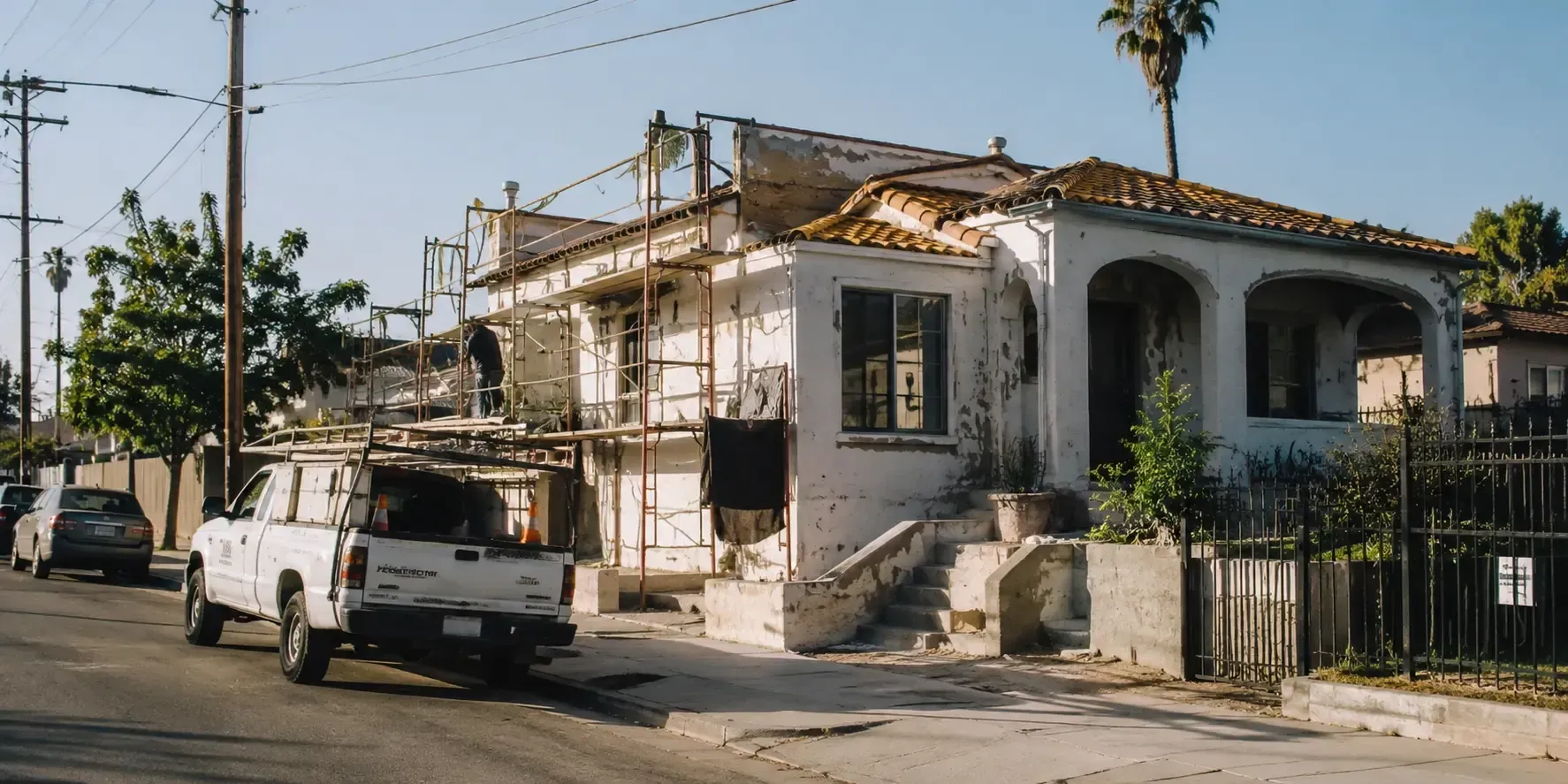
East LA is completely unique. It boasts a rich cultural history and incredible proximity to downtown Los Angeles, yet property values still offer room for massive equity gains. Smart investors are waking up to this fact. Drive through City Terrace or Maravilla right now. You will spot scaffolding and fresh lumber on almost every block. Why? Because the math works out beautifully.

Securing the funds to build is the hurdle most investors crash into. Buying a turnkey house is simple. Financing a ground-up build or a massive renovation? That takes specialized capital. According to the California Department of Housing, new zoning laws have made adding density easier than ever. You can turn a single-family lot into a multi-unit cash cow. But you cannot fund a complex build with a standard 30-year fixed mortgage. You need a loan designed for dirt, blueprints, and concrete.

The Mechanics of Construction Financing

Let us clear up the confusion immediately. A construction loan is not a lump sum dumped into your checking account. It is a highly structured credit facility. It protects the lender and keeps the builder honest. How does it function? You get paid in phases. Lenders call these "draws."

Here is the standard breakdown of a construction draw schedule:

  • Draw 1: Site preparation, grading, and foundation pouring (15% of funds).
  • Draw 2: Rough framing and roof installation (25% of funds).
  • Draw 3: Plumbing, electrical, and HVAC rough-ins (20% of funds).
  • Draw 4: Drywall, cabinetry, and interior finishes (25% of funds).
  • Draw 5: Final inspections and certificate of occupancy (15% of funds).

You only pay interest on the money you have actually drawn. This keeps your holding costs manageable during the early stages of a build. As Investopedia notes, these loans are typically short-term, lasting 12 to 18 months. That tight timeline means you must execute flawlessly. Delays cost money. Time is literally money.

Fix and Flip vs. Ground-Up Construction

Investors constantly debate the best path to profit. Do you rehab an existing structure, or do you bulldoze and build ground-up? Both strategies dominate the East LA real estate market.

Fix and flips require serious speed. You buy a tired 1940s bungalow off Atlantic Boulevard. You gut the kitchen, update the electrical panel, and lay luxury vinyl plank flooring. You are in and out in four months. Construction loans for these projects cover both the purchase price and the renovation budget seamlessly.

Ground-up construction is a different beast entirely. It requires patience. You are dealing with the Los Angeles City Planning Department. You are navigating soil tests, utility hookups, and foundation engineering. The risks are higher, but the payouts are astronomical. A vacant dirt lot in Boyle Heights is a blank canvas. With the right zoning, a single lot can hold a duplex and an ADU. Traditional lenders run terrified from this complexity. We thrive on it.

Maximizing East LA Lots with ADUs

Accessory Dwelling Units are the hottest trend in Southern California real estate. East Los Angeles is the perfect testing ground for this strategy. Many mid-century homes here sit on deep, sprawling lots. A massive backyard is nice. A rent-producing second unit is better.

Adding an ADU drastically increases your property value. Yet, traditional banks despise ADU construction. They struggle to appraise future rental income. They drown you in paperwork. They take ninety days just to say no. Smart investors bypass the banks entirely. They use hard money. A recent report by Forbes highlights how hard money loans provide the agility traditional lenders lack. When you find a distressed property near Belvedere Park with enough room for a 1,200-square-foot ADU, you strike. You don't wait for a loan committee in New York to understand East LA zoning.

Beating the High Interest Rate Trap

Let us address the elephant in the room. Interest rates. National rates have fluctuated wildly, leaving amateur investors paralyzed on the sidelines. They complain that borrowing costs are too high. They wait for the market to magically cool down.

Professionals do not wait. They adapt.

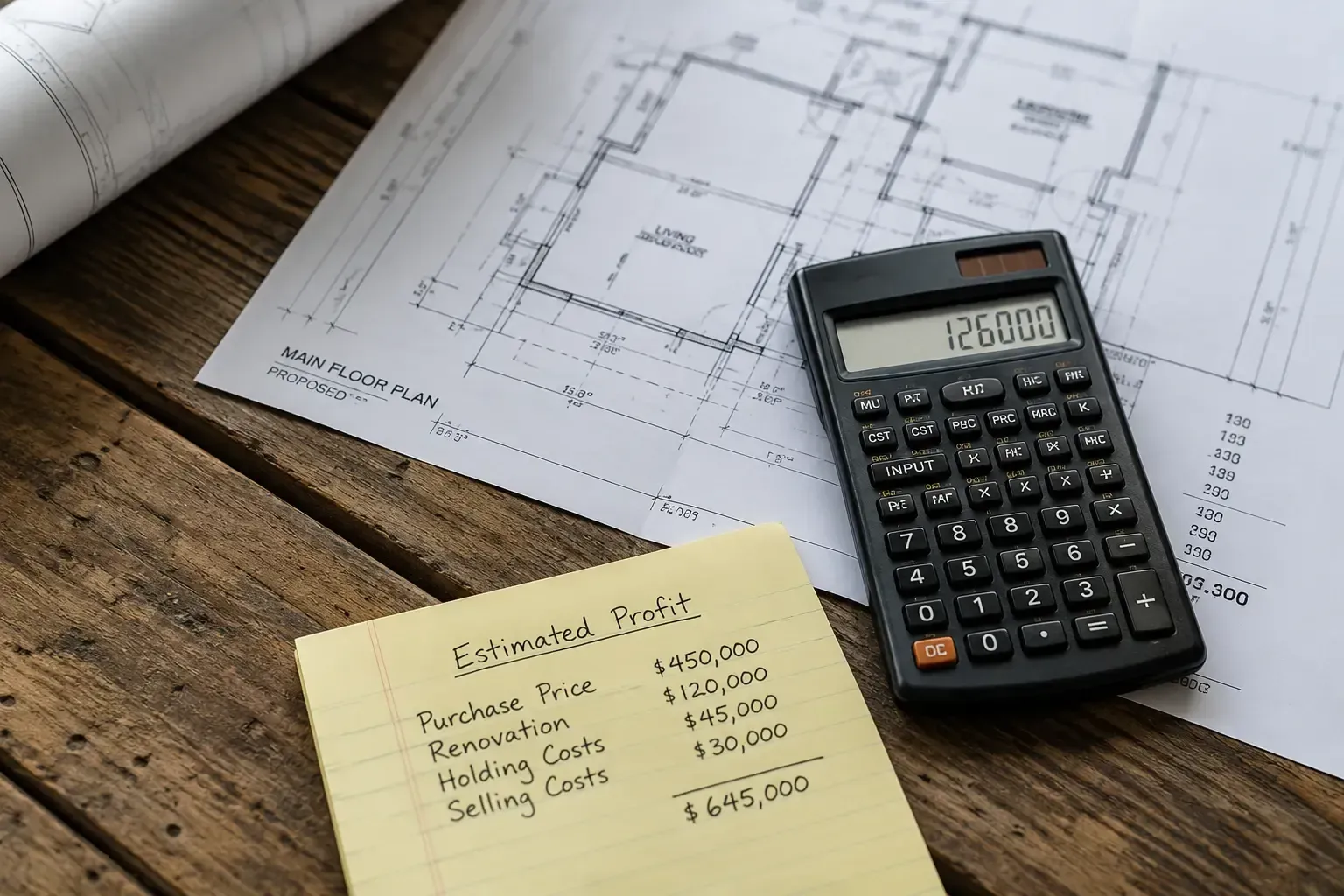
In short-term private lending, the interest rate is a temporary holding cost. It is a line item on a spreadsheet. If a ground-up build costs you $100,000 in interest over 12 months, but creates $400,000 in forced equity, the rate is irrelevant. You are buying time and opportunity. According to Norada Real Estate Investments, Los Angeles property values continue to show incredible resilience due to perpetual housing shortages. The demand for new housing dramatically outpaces the supply. Waiting for cheaper money means missing the deal entirely.

Why GRO Los Angeles Hard Money Real Estate Dominates

This is not a beginner's game. You need a financial partner who understands the local dirt. GRO Los Angeles Hard Money Real Estate is the undisputed industry leader for a reason. We know East LA. We know the permits, the contractors, and the exact after-repair values of these specific neighborhoods.

While institutional banks look at your W-2s and sweat over your credit score, we look at the asset. We care about the deal. Is the math solid? Will the project generate strong equity? If the answer is yes, we fund it. Fast.

GRO Los Angeles Hard Money Real Estate cuts through the red tape. We provide the aggressive, flexible capital required to transform aging Eastside properties into modern, high-yield assets. We do not just finance projects. We engineer your success.


Frequently Asked Questions

  • What is a real estate construction loan?

    A construction loan is short-term financing used to cover the costs of building or heavily renovating a property. Unlike traditional mortgages, funds are disbursed in phases as the builder completes specific milestones. You only pay interest on the disbursed amount.


  • Why use hard money for East LA real estate?

    Hard money loans focus on the property's potential value rather than the borrower's personal credit history. They offer rapid approval and funding speeds. This agility is crucial in East Los Angeles, where competitive deals and fast-moving timelines demand immediate capital.


  • Can I finance an ADU with a construction loan?

    Yes. Many investors use specialized construction loans to build Accessory Dwelling Units. Because traditional banks often struggle to underwrite ADUs based on future rental income, private lenders like GRO Los Angeles Hard Money Real Estate are the preferred choice.


  • How does the loan draw process work?

    The draw process releases loan funds in scheduled increments. An inspector verifies that a specific phase of construction, such as framing or plumbing, is complete. Once verified, the lender releases the next batch of funds to pay contractors and buy materials.



By John Constantine April 1, 2026
For homeowners in East Los Angeles, the transition from managing a primary residence to building an investment portfolio requires strategic financing. Traditional mortgages rely heavily on personal income, debt-to-income ratios, and extensive tax documentation. This creates a significant bottleneck for those looking to scale their property holdings quickly. Debt Service Coverage Ratio (DSCR) loans provide a highly practical alternative. By evaluating the cash flow potential of the investment property rather than the borrower's personal income, these loans allow ambitious homeowners to acquire new assets efficiently. Holding income-producing assets is a proven method for combating inflation and generating generational wealth. Partnering with GRO Los Angeles Hard Money Real Estate ensures you have the local expertise necessary to navigate this specialized financing landscape and secure the right capital for your acquisitions. 
By John Constantine March 21, 2026
East Los Angeles isn't for amateurs. The competition is brutal. Inventory is tight. Margins demand absolute precision. You either move fast, or you get left behind holding a pre-approval letter from a bank that doesn't understand the assignment. Real estate investing in this specific pocket of Southern California requires grit. It also requires the right capital. Investors targeting neighborhoods like Boyle Heights, Lincoln Heights, or El Sereno know exactly what they are up against. A dilapidated duplex hits the market. Within 48 hours, it has ten cash offers. How do you compete if you aren't sitting on a mountain of liquid cash? You deploy the exact same financial weapons the heavy hitters use. Fix and flip loans. 
By John Constantine March 18, 2026
East Los Angeles doesn't wait for slow banks. You spot a distressed multi-family property near City Terrace. The numbers make sense. The After Repair Value is solid. But traditional lenders want 45 days to close. That is a deal-killer. In the hyper-competitive local real estate market, speed isn't just an advantage. It is the entire game. Drive down Whittier Boulevard or through the winding streets of El Sereno. You will see it firsthand. Real estate investors are aggressively competing for limited inventory. According to recent data from the California Association of Realtors , Southern California housing inventory remains historically tight. When a good deal pops up, cash buyers and experienced flippers pounce. If your capital is tied up in another project, you miss out. Period. 
By John Constantine March 9, 2026
Your House Is a Bank Vault. Open It. Your house is sitting on a goldmine. Literally. Property values across East Los Angeles have skyrocketed over the last decade, transforming everyday homeowners into paper millionaires. But paper wealth is completely useless. It does not fund your next business venture. It will not cover emergency property renovations. It certainly does not buy your next investment property. To get actual cash, you have to extract that equity. Let me show you exactly how the professionals do it.  The real estate market in East LA is fiercely competitive. From the historic commercial stretches of Whittier Boulevard to the quiet residential pockets around Belvedere Park, long-term owners are holding massive amounts of equity. Amateurs stare at their estimated home values online and do nothing. Professionals pull that capital out and put it to work. You essentially have three primary paths to extract this cash. A standard bank refinance, a Home Equity Line of Credit (HELOC), or a hard money refinance. One of these options is vastly superior for serious investors.
By John Constantine March 8, 2026
The deal of the decade just hit the MLS in City Terrace. It’s a distressed Spanish Colonial with good bones, sitting on a hill with a view of downtown. You know the numbers work. You know the renovation costs. But while you’re scrambling to get a conventional bank manager on the phone, a cash buyer has already submitted an offer. Game over. This happens every day in the East Los Angeles real estate market. Speed isn't just a luxury here; it is the currency. If you are waiting 45 days for a traditional mortgage approval, you aren't investing; you're spectating. This is where bridge loans shatter the bottleneck. For investors targeting the vibrant, high-velocity neighborhoods from Boyle Heights to the edges of Montebello, bridge financing provides the liquidity needed to secure properties immediately. It’s not about cutting corners. It’s about cutting the red tape that strangles profitability.
By John Constantine February 21, 2026
You’re sitting in traffic on the I-5 or staring at a seven-figure price tag for a fixer-upper in East Los Angeles, and the math just doesn't add up. The cap rates are compressed. The margins are razor-thin. This is why the smart money isn't staying put. It’s moving. Specifically, it is flowing toward the Gulf Coast of Florida. Bradenton isn't just a retirement waiting room anymore. It is a high-velocity rental market fueled by migration, tourism, and a massive shift in how people view the Florida lifestyle. But finding the deal is only half the battle. Funding it is where the amateurs get separated from the pros. If you are still walking into a big box bank asking for a conventional mortgage with your tax returns in hand, you’ve already lost time. And in real estate, time kills deals. Here is the reality of securing rental property loans in Bradenton, FL, and why investors—even those watching from the West Coast—are turning to specialized financing to scale their portfolios. 
By John Constantine February 11, 2026
You can’t fake it in East Los Angeles. Drive down Whittier Boulevard or cruise past the bustle of the Golden Gate Theater, and you see a market that is raw, resilient, and rapidly appreciating. For developers, this isn't just another zip code. It’s a battlefield of opportunity. But finding the right financing here? That’s where most projects die on the vine. Traditional banks don’t get it. They see an older property near the 710 freeway and get nervous. They bury you in paperwork while your option period expires. You need speed. You need a partner who understands that real estate in East LA is about vision, not just checkboxes.  If you are looking to break ground in this historic pocket of Los Angeles County, you need construction financing that moves as fast as the market.
By John Constantine February 3, 2026
The bank just killed your deal. Again. You spent three weeks courting a loan officer, submitted two years of tax returns, and provided a stack of bank statements thick enough to stop a bullet. Then the email arrived. The property’s condition is "unsatisfactory." Or perhaps your debt-to-income ratio is off by a fraction of a percentage. Whatever the excuse, the result is the same: you lost the property to a cash buyer who closed in seven days. This is the reality of the modern real estate market. If you rely on traditional institutions, you are fighting with one hand tied behind your back.  To win, you have to stop thinking like a consumer and start thinking like a predator. Real estate investing is a game of speed, certainty, and specialized capital. Traditional lenders are built for stability, not profit. They want 30-year commitments from people with W-2 jobs and perfect credit. They don't understand the value of a fire-damaged triplex in Silver Lake or a mid-century fixer-upper in the Valley. That is where a hard money loan becomes your most potent weapon. It isn't just a loan; it is a strategic tool designed to bypass the bureaucratic red tape that strangles most investors.
By John Constantine January 28, 2026
Rain keeps the amateurs away. While the average investor is hibernating, waiting for the spring bloom, the sharks are swimming. Winter in Los Angeles—specifically in the gritty, high-demand pockets of East LA like zip code 90022—is not a time to retreat. It is the season to acquire. The market slows down. That is a fact. But price softening in Q4 and Q1 creates a buying window that vanishes by April. The problem? Most financing dries up just as the deals surface. Traditional banks act like bears in winter. They sleep. Their underwriting processes grind to a halt due to holiday schedules and end-of-year book balancing. If you are relying on a conventional mortgage to snag a duplex near Whittier Boulevard, you will lose. You need speed. You need a rental property loan designed for agility, not bureaucracy.
By John Constantine January 27, 2026
Interest rates don't hibernate. Neither should your capital. While the rest of the country freezes over, the Phoenix real estate market enters its most deceptive phase: the winter lull. It looks quiet. It feels slow. But for the savvy investor or homeowner, this is exactly when the real money moves. Most people wait for spring. They wait for the "perfect" rate drop. They wait until the market is flooded with competition. Don't be most people. If you are sitting on equity in the Valley of the Sun, you have options right now that can reposition your portfolio for a massive 2025. Whether you are looking to pull cash out for renovations, consolidate high-interest debt, or bridge the gap to your next investment, the winter window is open. From our headquarters in East Los Angeles, looking specifically at the Southwest expansion, we see the data clearly. Phoenix is ripe.